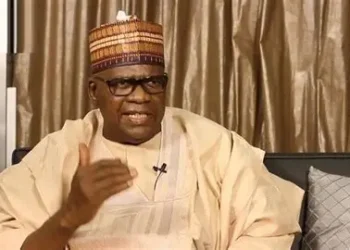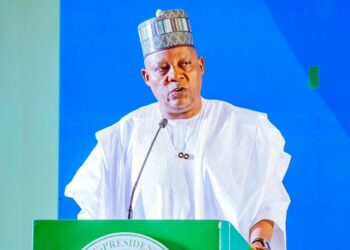
The Nigeria Revenue Service has warned that persistent tax leakages, delayed remittances and weak compliance by some government institutions and sub-national entities could threaten its target of generating about N40tn in revenue for the federation in 2026.
The agency raised the concern on Tuesday at the National Workshop on Strengthening Tax Compliance Under the New Tax Regime held at the Transcorp Hilton Hotel, Abuja, where officials from the Federal Government, states, Ministries, Departments and Agencies, and revenue authorities gathered to discuss strategies for improving tax compliance and revenue collection.
Speaking at the event, the Executive Director, Large Taxpayer and Government Directorate at the NRS, Ms Amina Ado, said the service had uncovered significant gaps in tax remittances during its monitoring and audit activities.
She said the ambitious revenue target would require transparency and stronger collaboration among all levels of government.
“This workshop is coming at a time when the Nigeria Revenue Service has taken the huge responsibility of raising about N40tn in tax revenue for the Federation. This historic goal requires us to approach our compliance gaps with sincerity and complete transparency,” she said.
Ado stated that although some sub-national entities had demonstrated strong compliance, the agency had identified structural leakages, particularly in the deduction and remittance of Value Added Tax and Withholding Tax.
“Our field monitoring and audit activities have revealed that while many sub-national entities are exemplary in their civic duties, there are still some significant structural leakages, especially in the prompt deduction and delay in remittance of Value Added Tax and Withholding Tax,” she said.
According to her, the situation had created distortions within the country’s fiscal framework.
“Whereas some jurisdictions work hard to fill the national revenue pool while others participate in the distribution without making their fair contribution, this compliance gap distorts and creates an imbalance in our fiscal federalism,” she added.
She noted that the NRS was seeking to shift its relationship with government institutions from an “enforcement-heavy friction” model to a collaborative compliance framework supported by technology-driven remittance systems and transparent processes.
In his keynote address, the Executive Chairman of the NRS, Dr Zacch Adedeji, represented by the Executive Director, Finance and Corporate Services, Mr Muhammad Lawal, described the N40tn target as a “Herculean task.”
Adedeji said the agency’s focus was to sustainably finance the Federation Account Allocation Committee, which he described as the financial lifeblood of the three tiers of government.
“Our major role at the Nigeria Revenue Service is to sustainably finance the Federation Account Allocation Committee. This fund is the financial lifeblood of the three tiers of government, and it is used to finance the critical developmental projects that our citizens depend on,” he said.
He explained that the workshop was designed to address persistent compliance bottlenecks, improve awareness among MDAs and Government-Owned Enterprises on their statutory tax obligations, and reduce transitional challenges arising from the new tax laws.
“This workshop is also expected to bridge the compliance gaps we regularly find in our monitoring and audit activities, set up direct communication channels to address structural bottlenecks, improve revenue collection and encourage absolute transparency and timeliness in tax remittances,” he said.
Adedeji said the service intended to move away from an enforcement-dependent approach to a framework based on voluntary compliance and institutional collaboration.
“Our goal is to move away from an enforcement-dependent approach and move to a collaborative, voluntary compliance framework where every institutional stakeholder contributes its fair share to our collective national prosperity,” he stated.
He warned that an imbalance in compliance across states and government-owned enterprises was damaging institutional fairness and undermining the broader tax culture.
“We have a report about the imbalance in the compliance existing among states and GOEs, which does great damage to institutional fairness, undermines the broader compliance culture and unfairly burdens compliant States,” he said.
“There must be a change in this story going forward as every level of government has to do its part responsibly to contribute to the national revenue pool that we all draw from.”