Lawmakers called for stronger security measures, increased investment in technology, the recruitment of forest guards and renewed efforts to establish state policing.
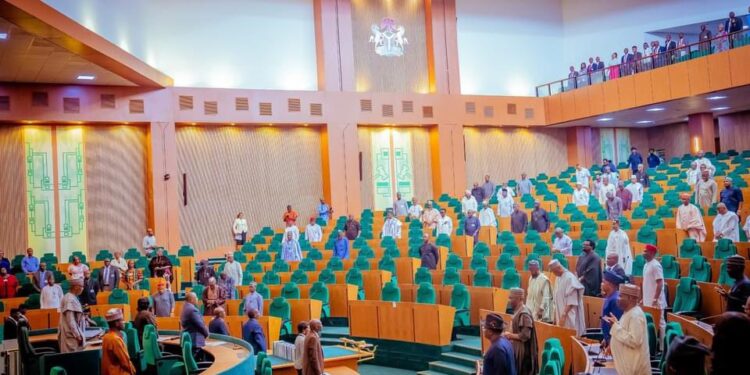
The House of Representatives on Tuesday summoned Nigeria’s service chiefs and the National Security Adviser (NSA), Nuhu Ribadu, to appear before lawmakers over the escalating wave of insecurity across the country, particularly in the North-west region.
The motion highlighted a series of deadly attacks, kidnappings and mass abductions across Zamfara, Sokoto, Katsina, Kaduna, Kano, Kebbi and Jigawa states, which lawmakers described as evidence of a deteriorating security situation despite ongoing military operations.
Presenting the motion, Mr Gumi said insecurity in Zamfara and the wider North-west had developed into a full-blown humanitarian crisis fuelled by armed banditry, kidnapping and the infiltration of transnational terrorist groups.
He lamented that between 1 and 6 June, armed bandits operating on motorcycles launched coordinated attacks on several communities across Zamfara and neighbouring states, killing residents, abducting travellers and forcing thousands to flee their homes.
The lawmaker drew attention to the abduction of seven students of the Federal Polytechnic, Kaura Namoda, from an off-campus hostel during an attack that occurred on the night of 2 June and continued into the early hours of 3 June.
He further disclosed that two senior lecturers of the institution had remained in captivity for more than two months despite the payment of ransom by their families and associates.
Mr Gumi also recounted a recent attack on Zurmi Local Government Area of Zamfara State in which four persons were killed and several travellers kidnapped.
According to him, bandits also abducted “a councillor and a local government director in Talata Mafara Local Government Area while they were travelling in connection with arrangements for intending pilgrims.”
The victims, he said, were later killed by their captors despite efforts to negotiate their release.
The lawmaker warned that the security crisis was no longer limited to Zamfara but had spread across the entire North-west.
He cited reports that on 31 May, at least 17 villagers were killed when hundreds of bandits riding motorcycles invaded Dangulbi community in Tureta Local Government Area of Sokoto State.
He added that persistent attacks had forced residents to abandon more than 15 communities across Tureta and Sabon Birni local government areas.
Mr Gumi also referenced the abduction of retired Major General Rabe Batsari, a former Director of Defence Information, and his wife along the Marabar Musawa-Kafinsoli road in Katsina State on 30 May.
According to him, dozens of elderly residents were also recently abducted in separate incidents and remain in captivity.
He further noted that communities in Kachia, Sanga and Birnin Gwari local government areas of Kaduna State continue to suffer recurring attacks, while border communities in Kano State have recorded cases of killings, cattle rustling and abductions.
“The continuous and unchallenged movement of bandits between towns, states and their hideouts severely undermines the credibility of the nation’s security architecture,” Mr Gumi said.
He warned that if left unchecked, the growing insecurity could devastate the economic and social foundations of the North-west region.
Contributing to the debate, lawmakers across party lines expressed frustration over the worsening security situation and questioned the effectiveness of current security strategies.
Many of them called for the immediate appearance of security chiefs before parliament tomorrow (Wednesday) to explain the persistent attacks and the government’s response.
A major intervention came from Abdussamad Dasuki, representing Kebbe/Tambuwal Federal Constituency of Sokoto State, who criticised what he described as a pattern of legislative resolutions without measurable outcomes.
“We keep mandating committees and mandating ourselves. We should have the Minister of Defence, Minister of Finance, the NSA, service chiefs and the Inspector-General of Police here tomorrow in a closed-door session to explain this insecurity to us,” he said.
“We cannot continue mandating without results.”
Mr Dasuki also urged President Bola Tinubu to immediately approve the recruitment of forest guards across the country to secure ungoverned spaces often used by bandits and terrorist groups as operational bases.
His proposal received broad support from lawmakers and was subsequently adopted by the House.
Stanley Olajide, who represents Ibadan North-west/Ibadan South-west Federal Constituency of Oyo State, advocated increased investment in technology-driven security solutions.
Mr Olajide stressed that government must commit more resources to surveillance technology, satellite monitoring systems and intelligence gathering to improve the ability of security agencies to track criminal elements.
Similarly, Olumide Osoba, representing Abeokuta North/Obafemi-Owode/Odeda Federal Constituency of Ogun State, urged state governments to invest in modern surveillance infrastructure.
He proposed the installation of closed-circuit television (CCTV) systems across states, with monitoring and control structures tailored to local security needs.
Several lawmakers also renewed calls for the establishment of state police, arguing that decentralised policing would improve intelligence gathering and response times.