The National Judicial Council (NJC), has recommended the elevation of 12 Justices to the Court of Appeal.
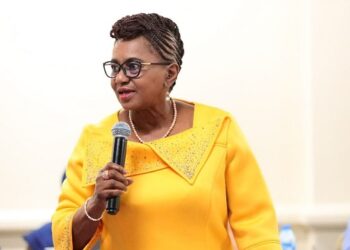
At its 111th Meeting held on Wednesday, under the Chairmanship of the Chief Justice of Nigeria, Justice Kudirat Kekere-Ekun, the Council made the recommendation to President Bola Tinubu.
A statement signed by the Deputy Director of Information of the NJC, Kemi Babalola-Ogedengbe, disclosed that those recommended for elevation are Justice Emeka Nwite, Justice James Kolawole Omotosho, Justice Yakubu Mohammed, Justice Abodunde Oluwatoyin and Justice Ajuwa Raphael.
Others are Justice Abua Ojie, Justice Ijohor Jennifer, Justice Shuaibu Bala, Justice Buba Njane, Justice Kado, Sanusi, Justice Ademola, Enikuomehin and
Justice Dadom Veronica.
The Council also recommended the appointment of Christine Ende as a Judge of the High Court of Benue State and two others for appointment as Kadis of the Sharia Court of Appeal, Katsina State.
These recommendations are intended to fill vacancies arising from the elevation and retirement of Judicial Officers across various levels of the Judiciary and to strengthen the capacity of courts for effective justice delivery.
READ ALSO: Court Jails Ex-Minister Saleh Mamman For 75 Years Over N33.8bn Fraud
The NJC has also extended the appointment off Justice Ijeoma Agugua as Imo State Acting Chief Judge for a further period of 3 months with effect from March 26, 2026 to June 26, 2026 to allow for completion of the process for appointing a substantive Chief Judge.
The Council commended Justice Ononeze-Madu for declining to be sworn in contrary to established constitutional procedure, describing the action as a demonstration of institutional integrity and respect for the rule of law.
It reiterated the call on the Imo State Judicial Service Commission to expedite the process of appointment of a substantive Chief Judge in order to ensure stability, safeguard judicial independence, and enhance the effective administration of justice in the State.
On issues of discipline, the NJC rejected appeals filed by eight judges of the Imo State Judiciary seeking a reversal of their compulsory retirement from service over age falsification.
The affected Judges were among 10 Judicial Officers recommended for compulsory retirement at the Council’s 109th meeting held on 25 June
2025.
Nine of them were found to have altered their dates of birth in official records to unlawfully extend their years in service, while Justice T. N Nzeukwu was found to have made himself available to be sworn in as Acting Chief Judge despite being fourth in the hierarchy of Judges, contrary to Section 271(4) of the Constitution.
The Council found that the affected Judges failed to present fresh evidence capable of justifying a reversal of the sanctions imposed on them.
However, the Council reinstated Hon. Justice T. I. Nze of the Customary Court of Appeal after His Lordship presented new evidence to the review committee which was found to be authentic.
After considering 13 investigation reports on petitions filed against Judicial Officers across the country over the handling of cases before them, the
NJC dismissed 8 petitions for lack of merit, want of diligent prosecution or for being time barred, while sanctions including one-year suspension without pay were imposed on Justice Ibrahim D. Shekarau of the High Court of Nasarawa State and Justice Edward A . E . Okpe of the High Court of the Federal Capital Territory.
While Justice Shekerau was found liable for judicial misconduct involving the grant of an ex parte order in breach of the Revised Code of Conduct for Judicial Officers of the Federal Republic of Nigeria, 2016, Justice Okpe was suspended for one year without pay over allegations of breach of fair hearing in a matrimonial case.
The petitioner Oluwafunke Obale Ozozoma had alleged that Justice Shekarau granted an ex parte order directing the transfer of N7 million from her bank account to a third party as a purported reversal of funds. She contended that the ex parte application was filed, heard, and granted on the same day without any substantive suit pending before the Court, and the order wrongly implied her involvement in fraud despite her not being charged or made a party to the proceedings.