To achieve justice and reconciliation, the Special Prosecutor must ensure that accountability appears neither distant nor external to victims.
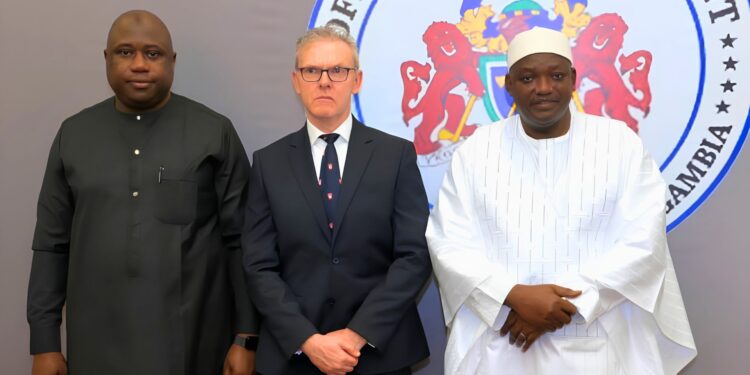
On 9 May, British Barrister Martin Hackett was sworn in as The Gambia’s Special Prosecutor for crimes committed under Yahya Jammeh’s rule from 1994 to 2017. His mandate covers serious human rights violations and international crimes, including torture, extrajudicial killings and enforced disappearances.
However, appointing a non-Gambian prosecutor seems hard to reconcile with the ‘Gambian-driven’ accountability process envisaged in the 2024 Special Accountability Mechanism Bill. While the bill recognises the need for international support, it prioritises Gambians for key positions.
A similar approach is followed by other laws emanating from this guiding framework. The Special Tribunal Statute adopts a cautious approach towards non-Gambian appointments. It even establishes a hierarchy of preference, prioritising appointments from ECOWAS member states, followed by those from other African countries. And the Special Prosecutor’s Office Act specifically calls on the president to give preference to Gambian nationals for the inaugural Special Prosecutor.
Appointing a foreign prosecutor is unusual in light of both domestic practice and comparative experience.
While foreign judges have occasionally served in The Gambia, foreign prosecutors have been rare. The only exception seems to be Phillip Bridges (1965-1968), whose appointment reflected several African states’ post-independence reliance on expatriate lawyers to establish and stabilise judicial institutions.
The Gambia’s broader transitional justice process has largely maintained national leadership. Unlike comparable institutions in Kenya and South Sudan (forthcoming), The Gambia’s Truth, Reconciliation and Reparations Commission (TRRC) had no foreign staff, except for a mental health expert who helped its Victim Support Unit. The TRRC’s final report was entirely authored by Gambian commissioners, staff and legal experts.
Although only one of the 13 applicants for Special Prosecutor was reportedly Gambian, any suggestion that the requirement process reflected a lack of relevant Gambian expertise would be difficult to sustain.
The country hosts one of Africa’s leading human rights institutions, the African Commission on Human and Peoples’ Rights, and has produced internationally recognised jurists. These include Fatou Bensouda, former International Criminal Court (ICC) prosecutor; Hassan Jallow, former International Criminal Tribunal for Rwanda prosecutor; and Abubacarr Tambadou, The Gambia’s representative in its genocide case against Myanmar before the International Court of Justice.
It is also difficult to justify The Gambia’s choice in light of prosecutorial models used in international and hybrid tribunals. Many courts operating in territories where crimes have occurred – such as Cambodia and the Central African Republic – have balanced international expertise with domestic ownership through joint or co-prosecutorial arrangements.
A notable exception is the Residual Special Court for Sierra Leone, which had a foreign prosecutor. But this was associated with limited local ownership and costly, selective prosecutions.
Specialised domestic accountability processes for international crimes have often relied on national prosecutorial leadership, as seen in Colombia, Ethiopia, Senegal, Iraq and Bangladesh. Foreign prosecutors are more common in tribunals established outside the territory of crimes, such as for the former Yugoslavia, Rwanda, Kosovo and Lebanon. This category also includes the proposed Hybrid Court for South Sudan.
Against this comparative backdrop, the Gambian decision raises a broader question: could appointing a foreign Special Prosecutor weaken the principle of national ownership that has otherwise characterised the country’s transitional justice framework?
Hackett’s appointment could be tied to the need for donor confidence, technical expertise and political neutrality. And perhaps appointing Gambian deputies may help address concerns about national ownership. However, the Special Prosecutor retains significant control over the process, including, to some extent, the appointment of the deputy.
The Gambia’s openness to foreign judges and the relatively low public trust in domestic institutions could indicate support for international experts. Yet past foreign judges have been criticised as ‘mercenary judges.’ Such concerns may become more significant in the politically sensitive context of transitional justice prosecutions, when legitimacy and national ownership are critical.
The Gambia’s accountability process is part of the broader transitional justice framework that began with the TRRC. That means accountability mechanisms should ultimately help foster reconciliation.
This approach is neither new nor unique to The Gambia. Even tribunals relatively detached from domestic transitional justice processes, such as the International Criminal Tribunals for the Former Yugoslavia and for Rwanda, have recognised that international crime trials should also aid reconciliation and restore social order.
One way to strengthen both justice and peace in the prosecution of Jammeh-era crimes is to ensure that community perceptions of justice are incorporated into the process. This includes finding complementary pathways between traditional and formal justice mechanisms.
That raises another important question: Is the Special Prosecutor’s Office, under foreign leadership, sufficiently familiar with African restorative justice traditions and local legal philosophies? This is significant because transitional justice in Africa increasingly seeks to connect formal accountability with locally grounded approaches to justice and reconciliation.
Similar concerns have emerged in international proceedings involving African cases. An example is the ICC’s sentencing trial of Dominic Ongwen, former brigade commander of the Lord’s Resistance Army in Uganda.
With a track record largely in Lebanon, Kosovo and Ukraine, Mr Hackett may lend international credibility to The Gambia’s accountability process, but his experience with African transitional processes is unclear.
This gives him an important responsibility not only to secure international support and confidence, but to ensure the process does not appear distant from or externally imposed on Gambian victims and society.
Mr Hackett’s role will require more than that of a conventional prosecutor focused on legal strategy and convictions. He will need to become a transitional justice prosecutor – attentive to the broader objectives of post-authoritarian accountability. This includes victim recognition, societal reconciliation, historical acknowledgement, and the restoration of public trust in justice institutions.
Tadesse Simie Metekia is a Senior Researcher in Special Projects at the Institute for Security Studies (ISS), Addis Ababa.
(This article was first published by ISS Today, a Premium Times syndication partner. We have their permission to republish).