The Federal Government has dismissed claims by South African authorities that the 268 Nigerians recently repatriated from the country were all living there illegally.
Officials said many of the returnees lost their legal status because of long delays in the processing and renewal of immigration documents by South Africa’s Home Affairs system.
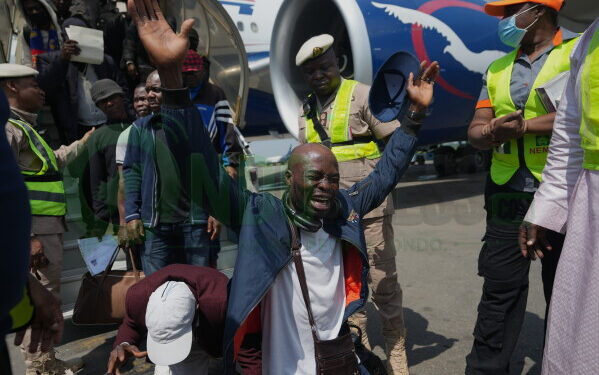
The first batch of evacuees arrived in Lagos aboard an Air Peace flight as part of the government’s voluntary evacuation programme for Nigerians affected by the recent wave of xenophobic attacks in South Africa.
Nigeria’s Acting High Commissioner to Pretoria, Ambassador Temitope Ajayi, said it was misleading to describe all the returnees as undocumented migrants.
According to him, several of them had applied for the renewal of their residence permits but were trapped by administrative backlogs that stretched for years.
He said many legitimate applicants became undocumented through no fault of their own after waiting endlessly for approvals.
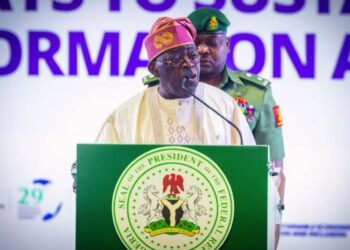
Ajayi also disclosed that President Bola Tinubu closely monitored the evacuation process and insisted that Nigerians facing danger should be brought home.
He said the President resisted pressure to suspend the exercise despite concerns over its diplomatic implications.
The envoy revealed that the government had scheduled additional evacuation flights for June 15, 18, 22 and 24 to bring back more Nigerians willing to leave South Africa.
The Federal Government also announced plans to strengthen engagement with South Africa through the Nigeria-South Africa Binational Commission and a newly introduced early warning mechanism to address future threats against Nigerians living in the country.
Some of the returnees also challenged the claim that they were illegal migrants.
They alleged that both South African immigration authorities and the Nigerian mission in Pretoria made it difficult for them to renew travel and residency documents.
Several of them recounted experiences of harassment, extortion and discrimination, claiming foreigners, especially Nigerians, had become regular targets.
One of the evacuees said he abandoned his business after repeated threats and attacks, while another claimed many migrants were unable to obtain valid documents despite making efforts to regularise their stay.
Others appealed to Nigerians still living in South Africa to consider returning home, warning that the security situation could deteriorate further.