• Pledges reform and fiscal discipline
•Ambassador demands arms embargo on terrorist groups
•Urges global action as illicit weapons fuel terror, conflict
Michael Olugbode and Sunday Aborisade in Abuja
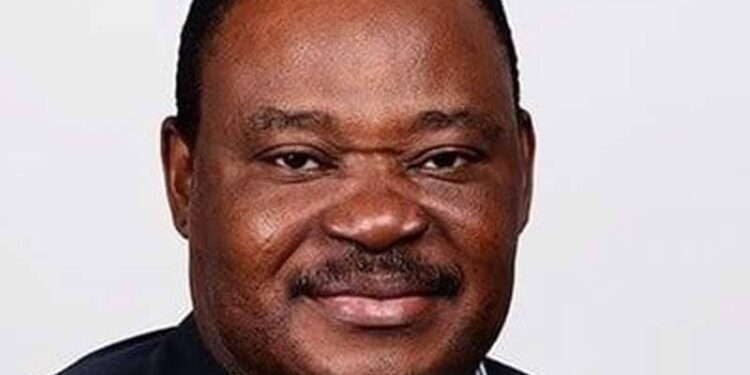
Nigeria’s Permanent Representative to the United Nations, Ambassador Jimoh Ibrahim, has been elected Chairman of the Fifth Committee of the United Nations General Assembly, placing the country at the helm of one of the UN’s most influential bodies responsible for administrative and budgetary affairs.
In his acceptance speech following the election, Ibrahim described the appointment as both a privilege and a weighty responsibility, pledging to guide the committee through a period marked by financial pressures, institutional reforms, and growing global challenges.
The Fifth Committee oversees the administrative and budgetary operations of the United Nations, making it central to the organisation’s ability to implement programmes and fulfill its mandates across the world.
Addressing delegates after his election, Ibrahim thanked member states for the confidence reposed in him and vowed to work closely with all regional groups, committee officers, and the UN Secretariat to ensure effective management of the committee’s agenda.
His emergence comes at a critical time for the United Nations, which continues to grapple with financial constraints and growing demands on its resources. Ibrahim acknowledged the organisation’s fiscal challenges, noting that delayed contributions from member states have contributed to a budget deficit running into billions of dollars.
He called on countries to meet their financial obligations promptly, stressing that the sustainability of the UN depends on predictable and adequate funding.
“The challenges before us require collective responsibility and decisive action,” he said, emphasising that effective stewardship of resources would be essential to maintaining the organization’s global impact.
The Nigerian diplomat also highlighted the importance of the ongoing UN reform agenda, describing it as an opportunity to strengthen efficiency, accountability, and institutional effectiveness across the organization.
Beyond financial concerns, Ibrahim pointed to escalating geopolitical tensions, economic uncertainty, poverty, insecurity, and rapid technological changes as issues demanding coordinated international responses.
He argued that leadership, innovation, and knowledge-driven policies would be critical in addressing these complex challenges and advancing global development.
A key theme of his address was consensus-building, which he described as the foundation of the Fifth Committee’s work. He pledged to foster cooperation among the UN’s 193 member states and ensure that differing perspectives are accommodated in the committee’s decision-making processes.
Drawing from his experience in Nigeria’s National Assembly, particularly on budgetary and inter-parliamentary matters, Ibrahim expressed confidence in his ability to bridge divides and build broad support for critical decisions.
Meanwhile, Ibrahim has delivered a blunt and sobering message to the international community, that small arms and light weapons have become Africa’s true weapons of mass destruction, driving terrorism, transnational crime, prolonged conflicts and humanitarian catastrophe across the continent.
Speaking on behalf of the 54-nation African Group at the 9th Biennial Meeting of States convened by the United Nations to review implementation of the Programme of Action on illicit small arms and light weapons, he placed Africa’s escalating security crisis squarely before the world body, demanding stronger global action on arms diversion, an outright ban on transfers to non-state armed actors, and sustained international support for African-led solutions.
The UN meeting, according to a statement by his Media Office yesterday in Abuja, was convened to assess progress on the Programme of Action, a landmark framework adopted twenty-five years ago to prevent, combat and eradicate the illicit trade in small arms, as well as the International Tracing Instrument, now twenty-one years old.
The Nigerian diplomat painted a stark picture of a continent where the proliferation of cheap, easily smuggled weapons has become the single greatest enabler of instability, powering terrorist insurgencies from the Sahel to the Lake Chad Basin, feeding transnational organised crime networks, entrenching protracted conflicts and generating humanitarian crises of a scale that overwhelms the capacity of affected states to respond.
“Small arms and light weapons have become Africa’s true weapons of mass destruction,” Ibrahim declared, in remarks that encapsulated the continent’s frustration with the pace of global action.
Speaking to the African Group’s Common African Position, the framework that guides the continent’s engagement at national, regional and international levels, Ibrahim outlined four key priorities that Africa is pressing the international community to support.
He stressed that national implementation must produce tangible, measurable outcomes rather than paper commitments. He noted that African countries have made concrete investments in legal and regulatory frameworks governing the entire life cycle of small arms and light weapons, from manufacture and marking through to stockpile management and disposal.
Ibrahim placed the issue of diversion, the process by which legally held weapons find their way into the hands of terrorists, criminals and armed groups, at the centre of Africa’s agenda.
He called for stronger physical security and stockpile management measures across peacetime, conflict and post-conflict environments, and pressed for improved end-user controls, monitoring systems, cross-border investigations and information-sharing mechanisms between states.
Besides, he urged the international community to take the decisive step of criminalising the conversion of deactivated, blank-firing and non-lethal firearms into fully functional weapons, a loophole that has been systematically exploited to rearm violent non-state actors across the continent.
Also, he renewed Africa’s call for a firm prohibition on the transfer of small arms and light weapons to unauthorised non-state actors, specifically naming criminal organisations and terrorist groups engaged in violent activities as entities that must be cut off entirely from any legal or grey-market supply chain.
The African Group’s position, he made clear, is not a plea for dependency but a demand for partnership, international assistance that is voluntary, demand-driven and respectful of national ownership.