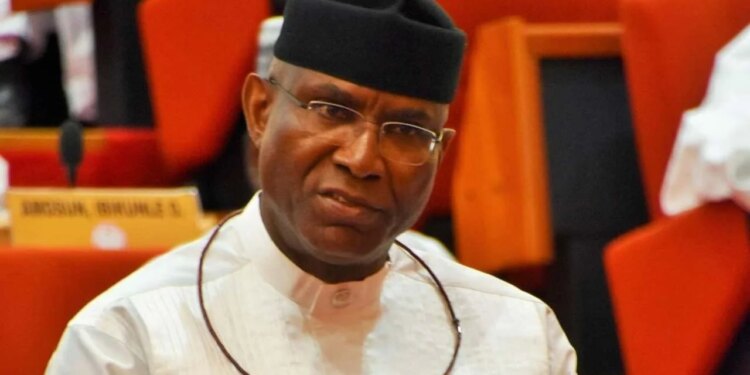
Former Deputy Senate President, Ovie Omo-Agege, may face legal scrutiny ahead of the 2027 general elections amid growing debate over his potential disqualification arising from alleged dual party membership and participation in primary elections conducted by different political parties within a short period.
Key Highlights:
•Omo-Agege faces possible disqualification questions ahead of 2027 elections
•Former Deputy Senate President reportedly participated in APC primary before joining NDC
•Claims of prior NDC membership have sparked legal and political debate
•Analysts cite Electoral Act provisions on party membership registers and eligibility
•Questions raised over compliance with party registration and nomination rules
•Potential legal challenges could emerge if Omo-Agege secures NDC nomination
The controversy gained attention following an interview on Arise Television in which Omo-Agege suggested he had longstanding ties to the Nigeria Democratic Congress (NDC) before May 10, 2026, while also acknowledging his recent political transition from the All Progressives Congress (APC).
Observers note that the situation has generated debate because Omo-Agege contested the APC Delta Central Senatorial Primary in May 2026, where he lost to incumbent Senator Ede Dafinone, before subsequently resigning from the ruling party on May 23rd 2026 and becoming active within the NDC.
Timeline Fuelling Omo-Agege Disqualification Debate
According to publicly available reports and statements:
Omo-Agege claimed to have held NDC membership status before May 10, 2026.
He participated in the APC Delta Central Senatorial Primary on May 19th 2026.
His resignation from the APC reportedly took effect on May 22, 2026.
He subsequently joined NDC activities and expressed interest in contesting for the Delta Central Senate seat under the party’s platform.
Read Also:
Critics argue that the sequence of events raises questions about party membership status and eligibility requirements under Nigeria’s electoral framework.
Electoral Law Questions Emerge
Legal analysts point to provisions governing political party membership registers and primary election participation.
Under existing electoral regulations, political parties are required to maintain and submit verified membership registers 21 days before conducting primaries. Only registered members listed in such records are generally eligible to participate in internal party contests.
Commentators argue that if a politician appears on the membership records of multiple parties within the same electoral cycle, questions could arise regarding eligibility and compliance with electoral guidelines.
Some analysts have also referenced ongoing legislative efforts aimed at discouraging dual party membership and strengthening internal party discipline.
Possible Legal Challenges Ahead
Political stakeholders suggest that if Omo-Agege eventually emerges as the NDC candidate for Delta Central Senatorial District, rival aspirants or political parties could file pre-election suits challenging his eligibility.
Such challenges could focus on questions surrounding party membership records, timing of resignation from the APC, and participation in separate party primary processes.
However, legal experts caution that any determination would ultimately depend on documentary evidence, party records, Independent National Electoral Commission (INEC) documentation, and judicial interpretation.
Omo-Agege Yet to Face Formal Challenge
As of the time of reporting, no court has ruled that Omo-Agege violated any electoral law, and no official determination has been made regarding his eligibility.
Supporters of the former Deputy Senate President maintain that his political moves were lawful and consistent with democratic rights of association.
They argue that any claims regarding an Omo-Agege disqualification remain speculative until tested before the appropriate electoral authorities or the courts.
Political Implications for Delta Central
The controversy is expected to remain a major talking point in Delta State politics as parties prepare for the 2027 general elections.
Political analysts say the case could become an important test of electoral regulations relating to party membership, defections, and candidate eligibility in Nigeria’s evolving political landscape.
Should formal petitions emerge, the matter could significantly influence the race for the Delta Central Senatorial seat and shape broader discussions on party discipline and electoral compliance ahead of 2027.