The political terrain in Ondo State is witnessing a major shift following the defection of former governor Olusegun Mimiko from the Peoples Democratic Party (PDP) to the All Progressives Congress (APC), in a move analysts say carries far-reaching implications for the 2027 general elections.
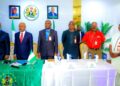
Mimiko, who governed the Sunshine State between 2009 and 2016, formally joined the ruling party at the APC Secretariat in Ward 7, Ondo West Local Government Area, weeks after announcing his resignation from the PDP.
Speaking at the event, Mimiko said his decision was driven by a desire to support the administration of Bola Ahmed Tinubu and contribute meaningfully to national development.
He commended key policy directions of the current administration, including the student loan initiative under NELFUND and ongoing efforts toward decentralising policing.
> “There are a lot of good things being done by the President Bola Ahmed Tinubu-led government… I am coming in to support ongoing efforts to keep Nigeria on the path of peace, progress and genuine development,” Mimiko stated.
Ondo State APC Chairman, Kolawole Babatunde, described Mimiko’s defection as a “homecoming,” noting that his track record in governance aligns with the progressive ideology of the party.
Also speaking, former federal lawmaker Joseph Akinlaja said the move signals the full integration of Mimiko’s political structure into the APC, describing it as a unifying moment for party stakeholders in the state.
Political observers believe Mimiko’s move goes beyond personal alignment, representing a strategic recalibration of power ahead of 2027.
As a longstanding political figure in the state, Mimiko’s exit is expected to weaken the PDP’s grassroots network, potentially triggering further defections and leaving the party struggling to maintain its electoral relevance in Ondo.
For the APC, Mimiko’s entry strengthens its hold on the South-West, a region already considered the backbone of President Tinubu’s political base.
His influence, especially among grassroots supporters, could prove decisive in consolidating votes and neutralising opposition challenges in future elections.
However, the development may also introduce new dynamics within the APC, as existing power blocs adjust to accommodate Mimiko’s structure and loyalists.
Analysts say how the party manages these internal alignments—particularly in the build-up to primaries—will be critical to maintaining unity.
With less than two years to the next general elections, Mimiko’s defection highlights the early onset of political realignments across Nigeria.
For the APC, it signals consolidation.
For the PDP, it marks a significant setback.
For Ondo State, it opens a new chapter in a rapidly evolving political contest.
As the countdown to 2027 continues, one thing is clear: the battle for political dominance has already begun.