My first media tour of Katsina State was in April, 2007 to cover the presidential election. The state had the singular honour of producing the two presidential frontrunners – Governor Umaru Yar’ Adua of the then ruling People’s Democratic Party (PDP), and retired Major General Muhammadu Buhari of the All Nigerian People’s Party (ANPP). Both eventually ended up emerging as elected presidents, suffered prolonged health crises and have gone to the great beyond. Katsina remains the only state that has produced two democratically elected presidents in our history.
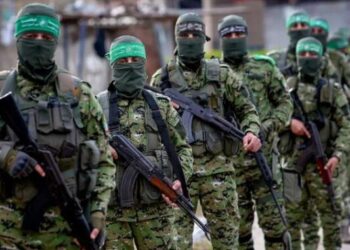
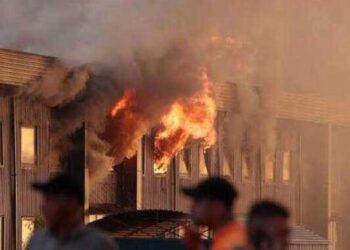
Katsina State is indigenously populated mainly by the Hausa and Fulani ethnic groups. History has it that the Hausa, the original indigenes, had their cradle in Daura but Katsina is seen as the seat of Hausa Islamic civilisation before the invasion of the Fulani who went on to establish themselves as the overlords. The purest form of the Hausa language known as “Katsinanci” is spoken in this state as well as others around it such as Kaduna (Zaria), Kano, Sokoto, Zamfara and others. When another opportunity of a media tour offered itself last week, the first thing that jumped into my heart was the insecurity there. Katsina State is one of the most terrorised states in Nigeria. Their assailants are not Boko Haram but Fulani Bandits. In fact, the immediate past Governor of the state, Bello Masari, once took his cabinet and some unarmed Nigerian soldiers into the forest to negotiate with armed-to-the-teeth bandits. This sparked a great outrage.
Assurances of maximum protection encouraged some of us to go on the trip. But when we arrived, the fear somewhat dissipated. Throughout our three days in the state during which we toured quite extensively, the fear of bandits only came up as jokes. Out of Katsina’s 34 Local Government Areas, eight are referred to as the “frontline” LGAs – Batsari, Safana, Jibia, Danmusa, Kankara, Faskari, Dandume and Sabua. The rest 26 are almost as safe as anywhere else in the country. The Governor Dikko Umar Radda administration has invested heavily in security architecture including the 2,400-strong Katsina State Community Watch Corps (KSCWC); trained, equipped with approved firearms, armoured personnel carriers, operational vehicles and motorcycles. All the organs of society are also mobilised and synergised against banditry in tandem with federal law enforcement agencies. The effort is not enough to stop attacks, abductions and ransom demands. But at least, it has pinned off banditry to certain precincts and enabled the state to move on with its developmental agenda.
One area of interest for me during the visit was education. Katsina State is frequently rated as one of the least literate in the country, with very high incidence of “out-of-school” children. The Dikko Radda administration is tackling this historical trend by offering free education to enable children of the poor and rural dwellers to get educated. The government adopted the smart school system where knowledge is imparted on the digital platform from the entry to School Certificate levels. We had the opportunity of witnessing the official inauguration of the 2,000 student capacity Dikko Special Model Smart School in Radda, Charanchi LGA. The Governor of Kwara State, Abdulrahman Abdulrazaq, and Minister of Education, Tunji Alausa, joined in the colourful occasion. The school offers free tuition, boarding, uniforms, books and even extends N15,000 stipends to all its students. It is one of three of its kind in the state, with more under construction. There is no better way to end “educational disadvantage” than this, if sustained.
One thing I noticed was that educational “disadvantage” in Katsina only exists at the lowest levels of society. At the upper levels, especially the governing organs of the state, some of the most educated hands are in charge. The Governor himself is a PhD holder and specialist in agricultural sciences. Most of the heads of state agencies are doctorate degree holders and exhibited uncanny, deep knowledge of their portfolios. And all of them – males and females – were young, in their late thirties and mid-forties. It is a governing machine that is second to none in the country!
This high quality human capacity has been brought to bear in the development process. Katsina, which is still essentially a typical inner traditional Northern metropolis, is experiencing one of the most explosive urban renewals in the country. How many state capitals in the country have pipe-born water? Katsina City does. Every major township or inter-city road is being turned into a dual carriage way. Katsina has ten major towns – Katsina City, Daura, Dutsin-Ma, Funtua, Malumfashi, Kankara, Batsari and others. All are receiving their shares of urban renewal.
Dikko Radda’s administration is also making huge impacts in other areas such as agriculture, health and what have you. There are some leaders who are really beating the frontiers with leadership performance but remain in the shadow of media attention, mainly because other things are grabbing the attention. In the case of Katsina and the North in general, insecurity is that main attention grabber. The ironic aspect of it is that the vectors of this insecurity are not enemies from far away lands. They are elements moulded in the foundries of religion and culture in Arewa North.
It was a myopic cultural mistake to let children of the poor and vulnerable live in the bushes as herders or roam the streets as almajiri. These elements have transformed into weapons fashioned against the very society that marginalised them. The North must end nomadism and the almajiri culture and offer the Dikko Radda template of free, smart education for all. This is the best and most effective medicine that can heal the North and Nigeria as a whole. If the amount of resources being poured into containing bandit terrorism were invested into good governance, the North would be much closer to the recovery of its lost glory.
Article My journey to Katsina, by Ochereome Nnanna Live On NgGossips.