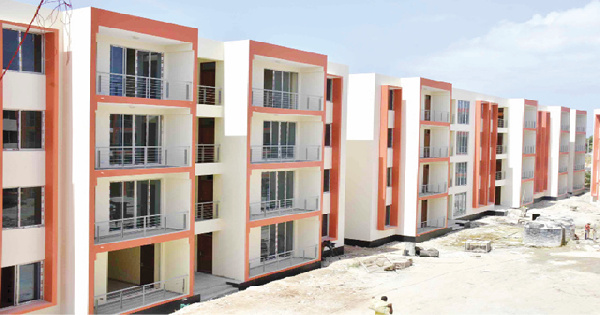
For many Nigerian civil servants, owning a home has long seemed unattainable. PRINCESS ETUK explores the country’s deepening housing affordability challenge and how the N10bn collaboration between the Federal Mortgage Bank of Nigeria and the Federal Government Staff Housing Loans Board may expand mortgage access, improve worker welfare and support homeownership for struggling public workers
In Abuja, Lagos, Port Harcourt, Kano and other major cities, soaring rents, inflation and weak wage growth have made decent housing increasingly unaffordable for many workers. Numerous employees now devote significant portions of their income to rent and transport, while others depend on loans to obtain accommodation.
But a recent partnership between the Federal Mortgage Bank of Nigeria and the Federal Government Staff Housing Loans Board is beginning to raise cautious optimism among public workers.
The two institutions recently signed an N10bn Memorandum of Understanding aimed at expanding access to affordable housing finance for federal civil servants through mortgage support, home renovation loans, rent assistance and incremental housing development.
The initiative follows the Federal Government’s approval of an N10bn FMBN-funded housing loan scheme for workers and is being viewed as one of the more direct interventions targeted at improving worker welfare amid worsening economic realities.
For many stakeholders, the significance of the collaboration extends beyond the size of the fund itself. It reflects growing concern over Nigeria’s deepening housing affordability crisis and the urgent need for structured interventions.
Nigeria’s housing deficit, estimated by stakeholders at over 15 million units, remains one of the country’s biggest developmental challenges. Rapid urbanisation, population growth, inflation, rising construction costs and weak mortgage systems have all contributed to the widening gap between housing demand and supply.
Millions of Nigerians remain trapped in overcrowded apartments, substandard housing or an increasingly expensive rental market. For civil servants whose salaries are often fixed despite rising living costs, the burden is particularly severe.
Across major cities, workers are increasingly relocating to distant suburbs where accommodation is cheaper, only to spend heavily on transportation and endure exhausting commuting hours.
The widespread practice of demanding one or two years’ rent upfront has further worsened the pressure on salary earners.