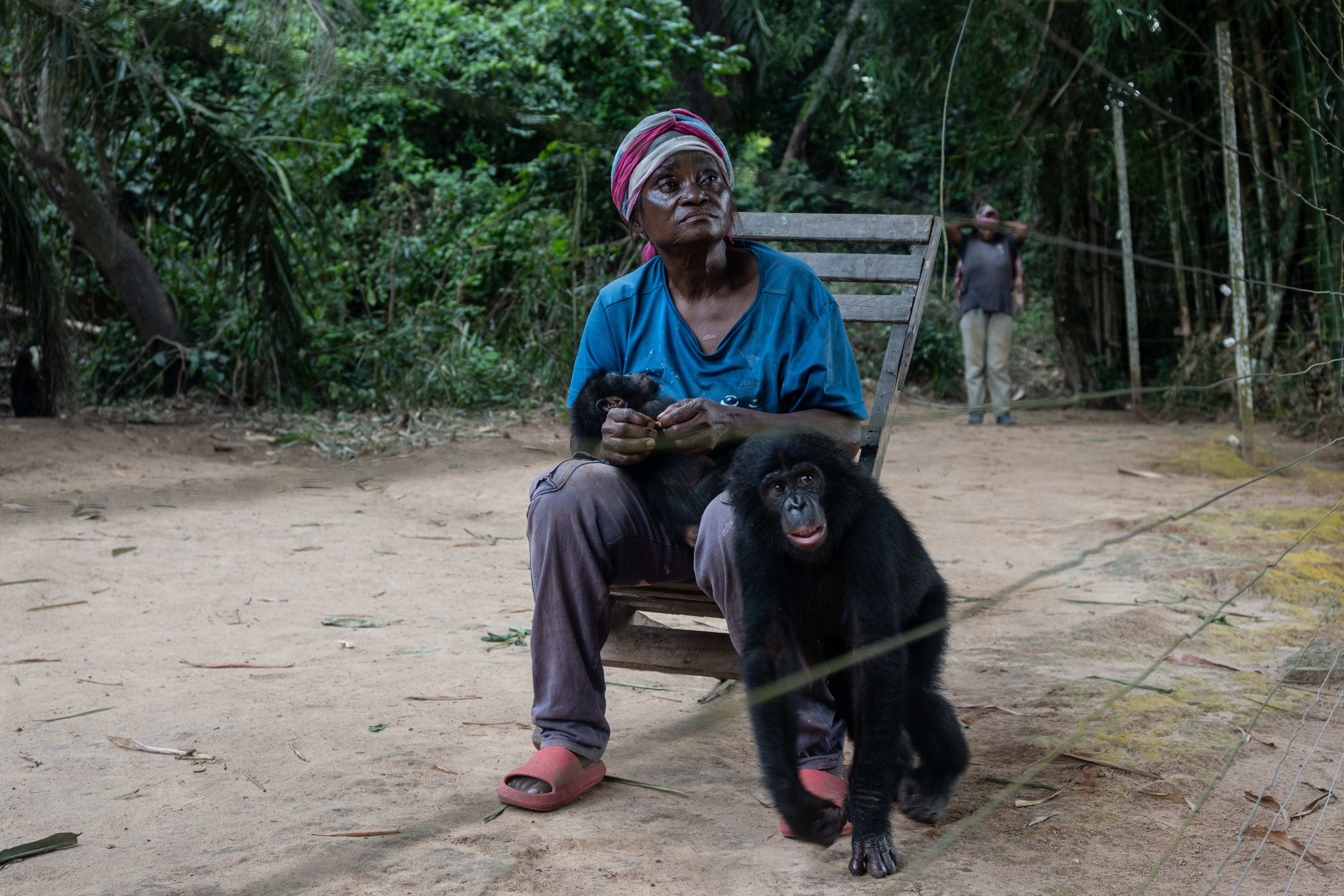
Micheline Nzonzi cradled a small, sleepy bonobo, an orphan whose life she will try to save over the next three years or so.
The 1-year-old’s chances are good, with motherly affection, milk from a bottle and frequent play with other babies.
“Without me, without us, these bonobos cannot survive,” said Nzonzi, who has been a bonobo foster mother for 24 years. “They survive thanks to human affection.”
This primate nursery on the forested outskirts of the Congolese capital of Kinshasa is the world’s only sanctuary for orphaned bonobos, usually rescued from poachers or found trapped in the homes of locals who raise them for their meat.
Although great apes like the endangered bonobos are legally protected from hunters, they are still targeted to satisfy demand for bushmeat in areas far beyond the Congo Basin, an expansive rain forest that is sometimes called Earth’s second lung.
The bushmeat trade ranges from rodents to antelopes, but a totemic ape like the bonobo may fetch a higher price.
“The bonobos are in danger. We are educating people to not kill the bonobos,” said Arsène Madimba, an educator with the Lola ya Bonobo sanctuary.
“We can’t kill them, we can’t put them at home as pets, we can’t eat them. Because of poaching, we can find big trading of orphaned bonobos across the country.”
Congo has proposed issuing ‘bonobo credits’
Bonobos raise their babies for four to five years. Their low reproductive cycle means they are vulnerable to environmental disturbances.
To protect them and their habitat, Congolese authorities last year broached the idea of issuing “bonobo credits,” similar to carbon credits, to reward communities for preserving forests. The program is yet to take off.
“There is a cultural difference” between Congo and neighboring Uganda, where apes are not hunted for meat, said primatologist Gladys Kalema-Zikusoka, founder of the Uganda-based Conservation Through Public Health group.
“In Congo, they believe that you can become as strong as (the primate eaten).”
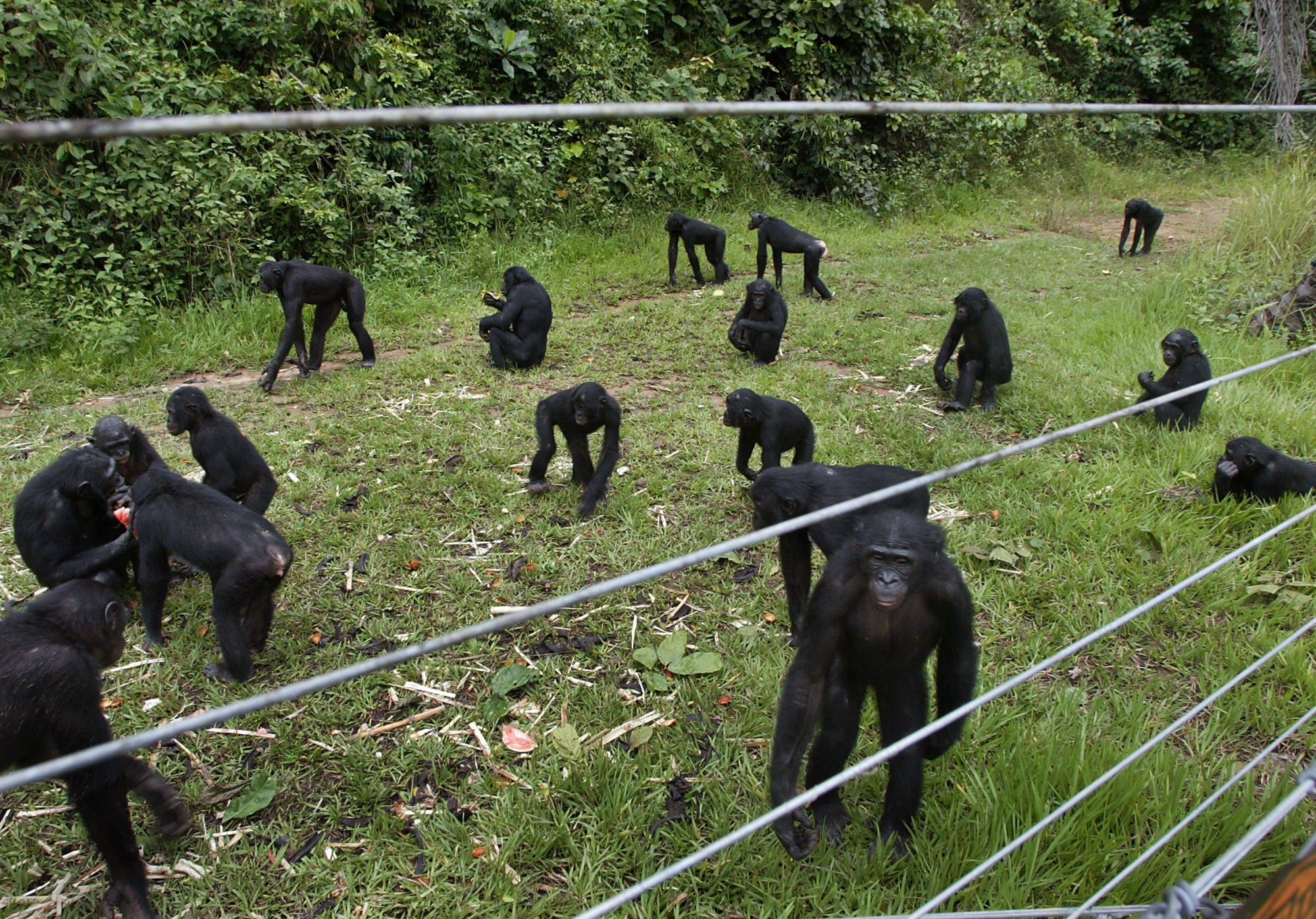
There are dozens of grown bonobos at Lola ya Bonobo. Some have lived there since 2002, when this sanctuary opened under the sponsorship of a conservation nonprofit known by its French name of Les Amis des Bonobos du Congo.
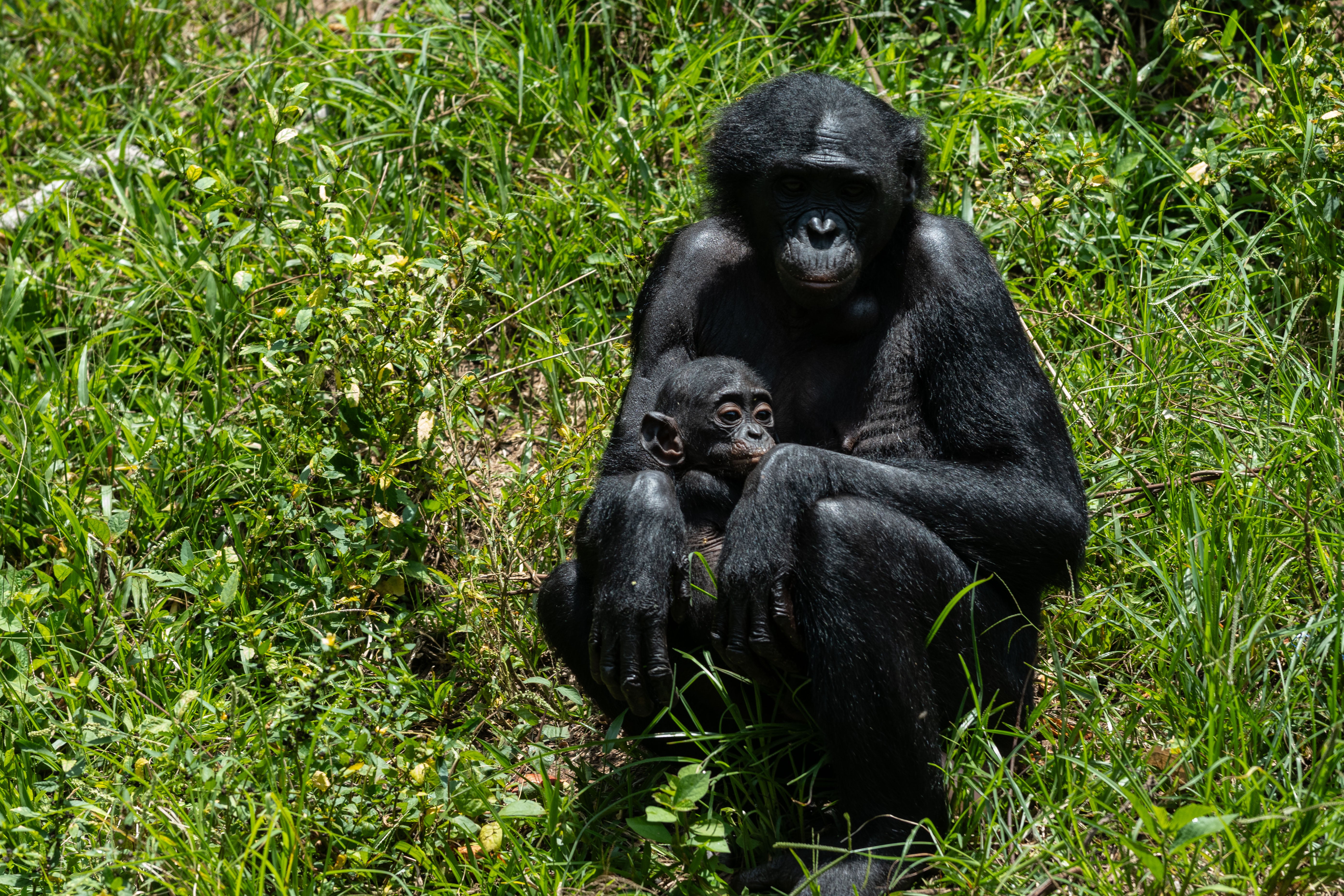
The nursery also has 11 young bonobos, with the most recent arriving earlier this year. Each baby is paired with a foster mother who will look after it for years before it can be transferred to bonobo groups open to visitors.
On rare occasions, an animal at Lola ya Bonobo eventually returns to the wild, which can take years of preparation.
About 20,000 bonobos are left in the wild
Bonobos share nearly 99 per cent of their DNA with humans and, along with chimpanzees, are our closest living relatives.
In the 1980s, primatologists estimated about 100,000 bonobos were left in the wild. The number is now estimated at roughly 20,000, an astonishing decline. The bonobo is threatened primarily by the commercial bushmeat trade, according to the International Union for Conservation of Nature.
The bonobo’s natural habitat is an area of dense equatorial forest south of the Congo River. Bonobos are rarely studied in the wild, and much of what is known about them emerged from studies in foreign zoos and by foreign researchers drawn to a fascinating creature.
The bonobo was first identified as a possibly separate species in 1929, when German anatomist Ernst Schwarz noticed a difference in the skull of a specimen believed to be a grown chimpanzee with an unusually small head.
Schwarz’s rival, an American zoologist named Harold Coolidge, later provided detailed descriptions that made it possible in 1933 to classify the bonobo as a separate species.
The bonobo is relatively well-known among Americans, due in part to its reputation as one of the most intelligent, peaceful and empathetic animals. They may even have a capacity for imagination, according to a study published in 2025 by Johns Hopkins University.
Bonobos are led by females and distinguished by their apparent lack of sexual jealousy. When two groups meet, females may switch sides without provoking a fight, unlike chimpanzees and gorillas. They may initiate casual mating, which happens so frequently, so intensely, and with such variety of style that bonobos are described as the “hippie apes.”
Market in monkey meat continues
In Kinshasa, the trade in primate meat has gone underground. Traders need permits to hunt antelopes and other species, but trading in “les macaques” is prohibited in part to prevent the spread of zoonotic diseases such as Ebola.
“I used to sell monkeys before, but now we cannot sell monkeys, any type of moneys,” said Charles Ntanga, a vendor at Masina market.
Ntanga wielded a flywhisk to swat flies that settled on the rancid carcass of a giant rodent before him, with a kilogram going for about $17. Guyva Mputu, the vendor next to him, was selling python, whose frozen flesh started to steam in the humid weather.
Baby bonobos captured by poachers are used to lure grown bonobos, which are shot when they come to investigate the noise, said Madimba of Lola ya Bonobo.
Orphaned bonobos build bonds with their caregivers, who often can identify each by name, said zookeeper Frank Lutete, whose role is to feed the animals. He paddled across the water to distribute papaya as the bonobos made a racket, coming down trees to collect his offerings.
Some bonobos thank him, he said, tapping their chests in a gesture of gratitude.