• Says interest rates, Naira devaluation, not new borrowing, piled up debt pressure
•Real debt rose 3% over three years
James Emejo in Abuja
Nigeria’s debt sustainability concerns are driven more by elevated interest rates and exchange rate volatility than excessive new borrowing, according to a report by The Briefing – Macro & Markets.
The report countered growing fears over Nigeria’s rising public debt profile and its debt service to revenue challenges. It argued that recent narratives suggesting that the country was sliding into a debt crisis were misleading because they relied heavily on nominal Naira figures without adjusting for FX distortions and historical liabilities.
The publication maintained that while Nigeria’s public debt rose sharply from N49.8 trillion in March 2023 to N159.2 trillion by December 2025, representing an apparent increase of over 200 per cent, much of the jump did not arise from fresh borrowing.
Instead, it said the increase was largely driven by the formal recognition of previously unrecorded obligations as well as the sharp depreciation of the Naira, which significantly inflated the local currency value of external debts.
The report identified two major factors behind the spike, namely the securitisation and recognition of about N30 trillion in Ways and Means advances previously owed the Central Bank of Nigeria (CBN) but excluded from official debt records.
The report stated, “For years, the government quietly borrowed from the central bank. About N30 trillion of that was never on the official list. In 2023 they finally added it in. The debt was always there — they just wrote it down.”
It also identified the sharp depreciation of the Naira following the foreign exchange market reforms and unification policy introduced in 2023 as one of the reasons why official debt swelled.
The report said nearly N43 trillion was added to the debt stock merely from the revaluation of existing foreign currency obligations after the Naira weakened from about N460/$ in March 2023 to about N1,500/$ by December 2025.
The Briefing stated, “Nigeria owes some money in dollars. When the naira got weaker, those same dollar loans suddenly counted as a much bigger number in naira. About N43 trillion of the ‘increase’ was just this maths – not new debt. A $100 loan now costs far more naira on paper.”
It pointed out that the exchange rate adjustment created the impression of a massive debt accumulation even where no fresh loans were contracted.
The report stated that when the debt stock was measured in dollar terms, instead of naira, the picture changed significantly. It said Nigeria’s total public debt was about $108.2 billion in March 2023 and rose only marginally to $110.9 billion by December 2025, representing a real increase of approximately three per cent over nearly three years.
The document maintained that the more critical issue confronting the country was not the size of the debt stock itself, but the rising cost of servicing obligations amid elevated interest rates and weak government revenues.
It stated that domestic interest rates surged from about eight per cent in 2023 to as high as 24 per cent in 2024, before moderating to about 17 per cent, significantly increasing debt service costs.
The report said, “It’s like a homeowner whose mortgage rate suddenly doubled — same house, same loan, but the monthly bill got brutal.”
The publication also dismissed conclusions drawn from debt burden methodologies based purely on nominal debt levels, insisting that globally accepted debt sustainability frameworks focus instead on ratios, such as debt-to-GDP and debt service-to-revenue.
The report stated that Nigeria’s debt-to-GDP ratio stood at 36.1 per cent in 2025, below the global average of about 92 per cent, and significantly lower than the United States’ ratio of about 116 per cent.
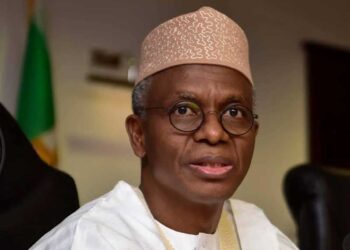
Meanwhile, Minister of Finance and Coordinating Minister of the Economy, Mr. Taiwo Oyedele, while reacting to the report, said, “Concerns about Nigeria’s debt sustainability should be assessed within the framework of globally accepted debt sustainability principles, rather than relying on the nominal size of debt stock, which is neither a threshold nor a determinant of sustainability anywhere in the world.
“There is no jurisdiction globally where debt sustainability is evaluated based on the absolute nominal value of public debt. Sustainability is determined by a country’s capacity to service its obligations over time, not by headline debt figures.
“This is why the DMO, in line with IMF/World Bank methodology, conducts Debt Sustainability Analysis (DSA) using ratios and stress scenarios rather than nominal stock comparisons.”
Oyedele said drawing conclusions solely from nominal debt levels was methodologically flawed and potentially misleading, as it ignored macroeconomic size, revenue capacity, currency composition, maturity structure, and debt dynamics.
The minister said, “The increasing share of domestic borrowing primarily reflects the depth and absorptive capacity of Nigeria’s domestic financial market, rather than heightened solvency risk.
“Domestic debt being largely denominated in local currency poses materially lower repayment risk compared to foreign currency obligations.
“A useful parallel is the United States, where total public debt stood at approximately US$36.2 trillion as of April 2026, equivalent to about 116% of GDP.
“Despite the large nominal figure, sustainability concerns are limited precisely because the debt is largely US-dollar denominated and financed domestically.
“The same logic applies, in proportional terms, to Nigeria’s domestic debt structure, though legitimate concerns around crowding-out effects remain valid and continue to be monitored.”
He added, “Using June 2023 as a base period for nominal comparisons creates a distorted narrative. A more appropriate reference point is March 2023, when the exchange rate was approximately N460/US$, compared to about #770/$ by June 2023, following the unification of the foreign exchange market.
“This adjustment was a corrective transparency measure, implemented when net FX reserves had fallen below US$4 billion, alongside an FX backlog exceeding $7 billion.
Comparing debt stocks across periods without adjusting for this structural FX break significantly overstates the real change in debt.”
According to him, “As of March 2023, Nigeria’s total public debt stood at $108.2 billion. By December 2025, this had increased marginally to $110.9 billion, representing a real increase of about three per cent over nearly three years. This presents a far more accurate picture of debt accumulation than naira-denominated figures.
“While the naira value of public debt rose sharply from #49.8 trillion in March 2023 to N159.2 trillion in December 2025, a nominal increase exceeding 200 per cent. This primarily reflects accounting and valuation effects, not excessive new borrowing.”