WASHINGTON — In the 2024 election, hundreds of social media influencers were credentialed for the first time to attend the Democratic and Republican conventions. They have been invited to holiday parties in the Pennsylvania governor’s mansion, to political rallies in Texas and to events at the White House by both the Biden and Trump administrations.
The role of influencers is surging as candidates and groups across the political spectrum see their social media feeds and personas as a pathway to younger audiences and harder-to-reach groups of voters.
“You have that sense of authenticity, like a friend is talking to you,” said Emma Briant, a professor at Notre Dame University’s Lucy Family Institute for Data & Society who studies propaganda.
That’s exactly what campaigns are hoping to harness when they partner with influencers, she said.
But the nature of that partnership has come into question in California’s hotly contested gubernatorial race after it emerged that a number of content creators — some with millions of followers, others with only a handful — had taken payments from the campaign of Democratic candidate Tom Steyer and not disclosed that they were paid to create those posts.
Some popular content creators have felt the need to explain themselves to their audience. Others have questioned how common such under-the-table payments might be, since there are no disclosure requirements for paid content at the federal level and few jurisdictions have any rules mandating it.
Some campaign finance advocates are concerned that voters could increasingly be influenced by social media posts that they don’t know are sponsored.
“The problem is that it doesn’t look like an ad,” said Saurav Ghosh, a former enforcement attorney at the Federal Election Commission. “It ends up really getting people at a place where they’re not skeptical and not able to tell the difference between what’s voluntary and where the influencer is acting as a paid spokesperson.”
Ghosh is now the director of campaign finance reform at the nonprofit Campaign Legal Center, which has filed a petition asking the FEC to require disclaimers on paid content created by influencers.
Roughly 1 in 5 Americans said they regularly got news from social media influencers in 2024, according to the Pew Research Center, and that number was nearly double for younger adults between the ages of 18 and 29.
Working with social media creators can be an easy way for candidates to try to boost their image, particularly with a younger audience.
“If they don’t have big personalities, maybe partnering with some influencers who seem cool and fun can make you seem cool and fun also through association,” said Link Lauren, a political influencer and podcaster who served as a communications advisor for Robert F. Kennedy Jr.’s presidential campaign in 2024.
California is one of the few places that requires disclosure of sponsored social media posts, but the 2023 law that created those rules hadn’t gotten much of a workout before the issue was raised in this contest through a series of dueling complaints with California’s Fair Political Practices Commission. The commission has yet to weigh in on the various accusations.
Under the law, influencers are required to provide disclosure that a post was sponsored and say who paid for it. Political groups are required to notify paid creators of the requirement.
Even if the commission finds that violations have occurred, the penalties are not especially harsh.
Violation of the law carries no civil, criminal or administrative penalties. The FPPC can take alleged violators to court and ask a judge to force compliance. And violations can be penalized with a fine of up to $5,000 per instance.
Influencers reporting influencers
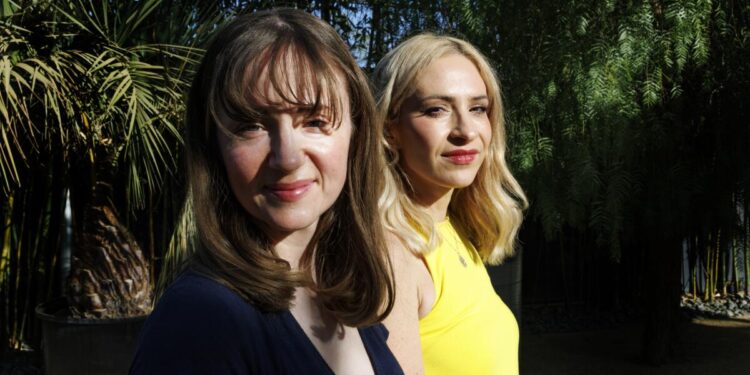
In the gubernatorial race, the issue of compliance was raised, naturally, by a pair of influencers.
Beatrice Gomberg has built up a following of more than 180,000 followers on TikTok, where she posts under the handle antiplasticlady. Her side gig of creating nonplastic children’s cups and lunch boxes became her main gig after she lost her human resources job at Macy’s during the COVID-19 pandemic.
“I started doing social media because I didn’t want to hire a marketing company,” Gomberg said.
Gomberg’s posts were initially largely focused on research related to plastic, but have become increasingly political over time. When campaigns put out the call for influencers to meet with candidates, Gomberg answered.
She interviewed Katie Porter, she met with Xavier Becerra. And it was at a Becerra event in April when she met Kaitlyn Hennessy, another influencer focused on politics.
They found that the world of online influencers can be isolating. “We stare in front of our phones,” Hennessy said. “You don’t want to see our screen time.”
As they scrolled through social media posts about the governor’s race, they found a cause to unite them.
They kept seeing videos posted by social media accounts espousing similar messages in support of Tom Steyer. Hennessy wondered at first if they were actually created by artificial intelligence.
They found that the posts seemed to be created by a network of women who, in some cases, had created several different profiles to promote a variety of products.
They pored over Steyer’s campaign disclosures and saw that the campaign listed payments to several prominent influencers — including one with the handle Zay Dante, with 1.8 million followers on TikTok — who had not disclosed creating paid content for the campaign.
The pair filed a complaint laying out their allegations, which the Steyer campaign has called “baseless.”
In the wake of their complaint, Steyer defended his campaign’s use of paid influencers, writing on Substack that his campaign believed content creators should be paid for their work and that the campaign had been transparent about disclosing those payments.
In a separate post, influencer Carlos Eduardo Espina said he had been paid $400,000 for work he has done for the Steyer campaign. Espina, who has more than 14 million followers on TikTok, is an advisor to the campaign, which was publicly announced.
“You will never see anything on my channels that I don’t believe in, or that I think goes against the best interest of my community. No one buys my opinion. But I also think it’s fair to be compensated for my work,” he wrote on Substack.
Not everyone is ready to accept payment for posts.
Lauren, the influencer who advised Kennedy’s campaign, said that while he doesn’t begrudge other influencers accepting sponsorship, he chooses not to.
“A passive viewer might think you really believe this,” he said. “I have a strong connection with my audience. I really consider them my family.”
Lauren said he favors disclosure requirements.
Briant, the propaganda researcher, said she is concerned about the possibility of foreign actors trying to influence Americans through paid posts.
In 2024, for example, federal prosecutors filed an indictment alleging that Russian state media employees had paid nearly $10 million to a Tennessee company that paid popular right-wing social media influencers to unwittingly produce pro-Russia content.
Briant said she believes that the only way to counteract increased manipulation through social media influencers is to impose harsh penalties when paid content is not disclosed.
“Ultimately, it’s a wild west at the moment if there are no repercussions for not doing it,” she said.
WASHINGTON — In the 2024 election, hundreds of social media influencers were credentialed for the first time to attend the Democratic and Republican conventions. They have been invited to holiday parties in the Pennsylvania governor’s mansion, to political rallies in Texas and to events at the White House by both the Biden and Trump administrations.
The role of influencers is surging as candidates and groups across the political spectrum see their social media feeds and personas as a pathway to younger audiences and harder-to-reach groups of voters.
“You have that sense of authenticity, like a friend is talking to you,” said Emma Briant, a professor at Notre Dame University’s Lucy Family Institute for Data & Society who studies propaganda.
That’s exactly what campaigns are hoping to harness when they partner with influencers, she said.
But the nature of that partnership has come into question in California’s hotly contested gubernatorial race after it emerged that a number of content creators — some with millions of followers, others with only a handful — had taken payments from the campaign of Democratic candidate Tom Steyer and not disclosed that they were paid to create those posts.
Some popular content creators have felt the need to explain themselves to their audience. Others have questioned how common such under-the-table payments might be, since there are no disclosure requirements for paid content at the federal level and few jurisdictions have any rules mandating it.
Some campaign finance advocates are concerned that voters could increasingly be influenced by social media posts that they don’t know are sponsored.
“The problem is that it doesn’t look like an ad,” said Saurav Ghosh, a former enforcement attorney at the Federal Election Commission. “It ends up really getting people at a place where they’re not skeptical and not able to tell the difference between what’s voluntary and where the influencer is acting as a paid spokesperson.”
Ghosh is now the director of campaign finance reform at the nonprofit Campaign Legal Center, which has filed a petition asking the FEC to require disclaimers on paid content created by influencers.
Roughly 1 in 5 Americans said they regularly got news from social media influencers in 2024, according to the Pew Research Center, and that number was nearly double for younger adults between the ages of 18 and 29.
Working with social media creators can be an easy way for candidates to try to boost their image, particularly with a younger audience.
“If they don’t have big personalities, maybe partnering with some influencers who seem cool and fun can make you seem cool and fun also through association,” said Link Lauren, a political influencer and podcaster who served as a communications advisor for Robert F. Kennedy Jr.’s presidential campaign in 2024.
California is one of the few places that requires disclosure of sponsored social media posts, but the 2023 law that created those rules hadn’t gotten much of a workout before the issue was raised in this contest through a series of dueling complaints with California’s Fair Political Practices Commission. The commission has yet to weigh in on the various accusations.
Under the law, influencers are required to provide disclosure that a post was sponsored and say who paid for it. Political groups are required to notify paid creators of the requirement.
Even if the commission finds that violations have occurred, the penalties are not especially harsh.
Violation of the law carries no civil, criminal or administrative penalties. The FPPC can take alleged violators to court and ask a judge to force compliance. And violations can be penalized with a fine of up to $5,000 per instance.
Influencers reporting influencers
In the gubernatorial race, the issue of compliance was raised, naturally, by a pair of influencers.
Beatrice Gomberg has built up a following of more than 180,000 followers on TikTok, where she posts under the handle antiplasticlady. Her side gig of creating nonplastic children’s cups and lunch boxes became her main gig after she lost her human resources job at Macy’s during the COVID-19 pandemic.
“I started doing social media because I didn’t want to hire a marketing company,” Gomberg said.
Gomberg’s posts were initially largely focused on research related to plastic, but have become increasingly political over time. When campaigns put out the call for influencers to meet with candidates, Gomberg answered.
She interviewed Katie Porter, she met with Xavier Becerra. And it was at a Becerra event in April when she met Kaitlyn Hennessy, another influencer focused on politics.
They found that the world of online influencers can be isolating. “We stare in front of our phones,” Hennessy said. “You don’t want to see our screen time.”
As they scrolled through social media posts about the governor’s race, they found a cause to unite them.
They kept seeing videos posted by social media accounts espousing similar messages in support of Tom Steyer. Hennessy wondered at first if they were actually created by artificial intelligence.
They found that the posts seemed to be created by a network of women who, in some cases, had created several different profiles to promote a variety of products.
They pored over Steyer’s campaign disclosures and saw that the campaign listed payments to several prominent influencers — including one with the handle Zay Dante, with 1.8 million followers on TikTok — who had not disclosed creating paid content for the campaign.
The pair filed a complaint laying out their allegations, which the Steyer campaign has called “baseless.”
In the wake of their complaint, Steyer defended his campaign’s use of paid influencers, writing on Substack that his campaign believed content creators should be paid for their work and that the campaign had been transparent about disclosing those payments.
In a separate post, influencer Carlos Eduardo Espina said he had been paid $400,000 for work he has done for the Steyer campaign. Espina, who has more than 14 million followers on TikTok, is an advisor to the campaign, which was publicly announced.
“You will never see anything on my channels that I don’t believe in, or that I think goes against the best interest of my community. No one buys my opinion. But I also think it’s fair to be compensated for my work,” he wrote on Substack.
Not everyone is ready to accept payment for posts.
Lauren, the influencer who advised Kennedy’s campaign, said that while he doesn’t begrudge other influencers accepting sponsorship, he chooses not to.
“A passive viewer might think you really believe this,” he said. “I have a strong connection with my audience. I really consider them my family.”
Lauren said he favors disclosure requirements.
Briant, the propaganda researcher, said she is concerned about the possibility of foreign actors trying to influence Americans through paid posts.
In 2024, for example, federal prosecutors filed an indictment alleging that Russian state media employees had paid nearly $10 million to a Tennessee company that paid popular right-wing social media influencers to unwittingly produce pro-Russia content.
Briant said she believes that the only way to counteract increased manipulation through social media influencers is to impose harsh penalties when paid content is not disclosed.
“Ultimately, it’s a wild west at the moment if there are no repercussions for not doing it,” she said.