The Centre for the Promotion of Private Enterprise (CPPE) has urged Nigerian policymakers to pursue a more balanced economic strategy that complements recent macroeconomic stabilisation gains with measures that promote investment, job creation, poverty reduction and inclusive growth.
The call came in response to the latest International Monetary Fund (IMF) Article IV Consultation Report on Nigeria, which commended the Federal Government’s economic reforms and acknowledged progress in restoring macroeconomic stability.
While welcoming the Fund’s positive assessment, the private sector advocacy group argued that the next phase of economic management should focus on ensuring that stabilisation achievements translate into tangible welfare improvements for citizens.
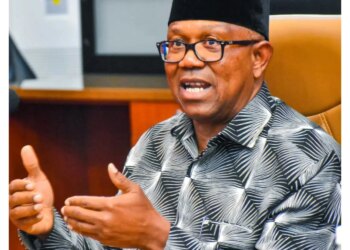
CPPE Chief Executive Officer, Dr. Muda Yusuf, said on Sunday that the IMF’s recognition of reforms undertaken by the Nigerian authorities aligns with the position long advanced by the private sector and other stakeholders regarding the benefits of ongoing economic adjustments.
According to him, the reforms have contributed to improved stability in the foreign exchange market, stronger external sector balances, enhanced investor confidence and the restoration of policy credibility.
He noted that declining exchange rate volatility, improved foreign reserve levels, increased capital inflows and stronger corporate earnings among listed companies demonstrate the positive impact of the stabilisation measures implemented over the past three years.
“These gains are significant. After years of macroeconomic distortions, the economy is gradually moving from a regime of instability to one of greater predictability. This is an important foundation for investment, productivity and sustainable growth,” Yusuf said.
Despite these improvements, CPPE expressed concern over the continued prevalence of poverty, food insecurity and declining household purchasing power, stressing that economic reforms should ultimately be measured by their impact on the welfare of citizens rather than by macroeconomic indicators alone.
The organisation argued that while exchange rate stability, reserve accumulation and fiscal consolidation are important policy outcomes, the true success of reforms would depend on their ability to lower food prices, improve employment opportunities, boost incomes and raise living standards.
“The challenge before policymakers is no longer merely one of economic stabilisation; it is increasingly one of inclusive prosperity,” the statement noted.
CPPE also raised concerns over what it described as the risk of excessive reliance on monetary tightening as a tool for economic management.
While acknowledging that higher interest rates have contributed to moderating inflation and supporting exchange rate stability, the organisation warned that sustained tight monetary conditions could undermine investment, enterprise growth and job creation.
According to the group, lending rates in Nigeria remain among the highest globally, making it increasingly difficult for businesses to access affordable credit for expansion and productive investment.
It further observed that elevated yields on government securities have intensified the crowding-out effect within the financial system, encouraging banks and investors to channel funds into treasury bills and government bonds rather than financing productive sectors of the economy.
“An economy cannot achieve sustainable development when financial capital earns higher returns from government securities than from supporting enterprise, innovation and industrialisation,” CPPE stated.
The organisation also challenged the IMF’s apparent scepticism towards development finance interventions, arguing that targeted financing remains essential for addressing structural financing gaps in critical sectors such as agriculture, manufacturing, housing and infrastructure.
CPPE maintained that Nigeria’s economic structure differs significantly from those of advanced economies and therefore requires strategic policy interventions to support sectors that are unable to attract adequate long-term financing through conventional market mechanisms.
It noted that agriculture and infrastructure projects, in particular, require patient capital and longer financing tenors that commercial banks are often unable or unwilling to provide.
“Development finance should not be viewed as a distortion of the market but as a necessary response to market failure. Economic transformation across both developed and emerging economies has historically benefited from development finance institutions,” he added.
The private sector think tank also highlighted the growing fiscal implications of prolonged monetary tightening, warning that elevated interest rates have significantly increased the cost of domestic borrowing and expanded government debt-service obligations.
According to CPPE, rising debt servicing costs continue to constrain fiscal space, leaving fewer resources available for infrastructure development, healthcare, education and other growth-enhancing investments.
The organisation welcomed recent indications by the Minister of Finance that the Federal Government is exploring options to refinance parts of its debt portfolio to reduce borrowing costs, describing the move as a positive step towards strengthening fiscal sustainability.
On external sector vulnerabilities, CPPE agreed with the IMF’s concerns regarding Nigeria’s increasing dependence on foreign portfolio investments. While acknowledging the role of portfolio inflows in supporting exchange rate stability and liquidity, it warned that such flows remain highly susceptible to shifts in global investor sentiment and external shocks.
The organisation stressed that sustainable external sector resilience would require stronger export performance, higher productivity, increased foreign direct investment and improved competitiveness across the domestic economy.
“Hot money can stabilise an economy temporarily; productive investment is what transforms it permanently,” Yusuf said.
CPPE also questioned the continued emphasis on conditional cash transfers as the centrepiece of Nigeria’s social protection framework, arguing that the programme faces persistent challenges relating to beneficiary identification, transparency and governance.
Instead, the organisation advocated increased public investment in agriculture, transportation infrastructure, healthcare, education, water supply and rural development as a more sustainable approach to reducing poverty and improving living standards.
According to the group, investments that lower the cost of food, transportation and essential services would deliver broader and longer-lasting social benefits than direct cash transfers alone.
“The most effective poverty reduction programme is one that reduces the cost of living and expands economic opportunities,” the statement noted.
CPPE further observed that the IMF report did not sufficiently emphasise the role of state governments in driving economic reforms and development outcomes.
It noted that following improvements in federation revenue allocations, sub-national governments now control significantly larger fiscal resources and have become increasingly important to addressing challenges such as food production, rural infrastructure, primary healthcare, basic education and local security.
The organisation argued that any meaningful strategy for economic transformation, poverty reduction and inclusive growth must recognise the critical role of state governments in delivering development outcomes.
“Macroeconomic stability may rescue an economy from crisis, but shared prosperity is what secures public confidence in reform.
That should be the defining objective of the next phase of Nigeria’s economic journey,” Yusuf concluded.