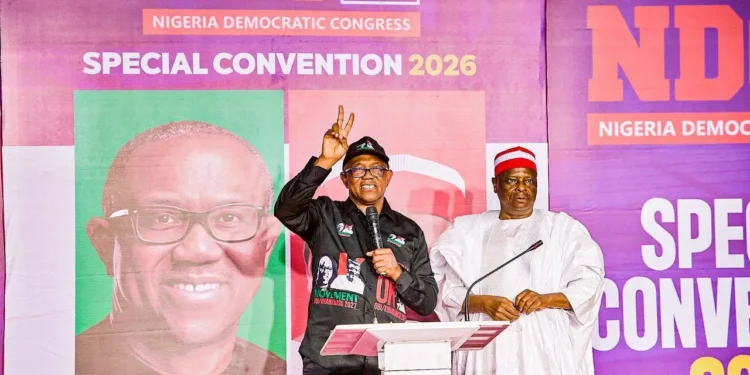
Fresh controversy has erupted within the Nigeria Democratic Congress (NDC) ahead of the 2027 general elections, following allegations that supporters of former Kano State governor, Rabiu Musa Kwankwaso, secured most of the party’s tickets in key Northern states, while loyalists of former Anambra State governor, Peter Obi, were largely shut out of the nomination process across Southern Nigeria and the Federal Capital Territory (FCT).
Key Highlights
Allegations emerge over uneven distribution of NDC tickets.
Kwankwaso loyalists reportedly secure nominations across several Northern states.
Obi supporters claim they were denied opportunities in the South and FCT.
Former Bayelsa governor, Senator Henry Seriake Dickson, faces scrutiny over party strategy.
Aisha Yesufu reportedly expresses disappointment over failed Senate ticket bid.
Political observers speculate on future alliances within the NDC ahead of 2027.
The latest development has exposed growing tensions within the opposition party as stakeholders question the fairness of its internal processes and the balance of power among its leading political blocs.
According to political observers, supporters aligned with Kwankwaso reportedly received approval to contest various elective positions in states such as Kano, Taraba and Nasarawa, among others. However, supporters of Peter Obi allegedly encountered significant obstacles in their efforts to secure nominations in Southern states and the FCT.
At the centre of the emerging controversy is NDC National Leader and former Bayelsa State Governor, Senator Henry Seriake Dickson, whose role in managing the party’s internal dynamics has attracted increasing attention.
Analysts describe Dickson as a seasoned political strategist focused on building a long-term national structure capable of challenging the ruling party. However, critics argue that the current ticket allocation process has created perceptions of imbalance that could undermine party unity.
The controversy intensified after reports that activist and prominent Obi supporter, Aisha Yesufu, was unable to secure an FCT Senate ticket, a development that has fuelled concerns among members of the party’s youth-driven support base.
Political observers suggest that Dickson may be pursuing a broader coalition strategy by accommodating Kwankwaso’s political structure in Northern Nigeria while relying on Obi’s popularity and grassroots appeal to strengthen the party’s support in the South.
Speculation has also emerged about possible future political alignments involving key NDC figures beyond the 2027 elections. While no official confirmation exists, discussions within political circles continue to focus on potential strategic partnerships aimed at strengthening the opposition’s chances in future electoral contests.
Read also:
The NDC, which has attracted several influential political figures in recent months, has consistently projected itself as a credible alternative to the ruling establishment. Party leaders have repeatedly emphasised unity, inclusiveness and institution-building as core objectives ahead of the 2027 elections.
However, the growing dispute over ticket distribution threatens to test the party’s cohesion and could alienate sections of the support base that view internal democracy as critical to the party’s credibility.
As preparations for the 2027 general elections gather momentum, political analysts say the ability of the NDC leadership to manage competing interests and resolve internal grievances may determine whether the party emerges as a formidable opposition force or faces deeper internal divisions.
For now, the unfolding ticket controversy has brought the party’s internal power dynamics into sharp focus and raised fresh questions about the future direction of Nigeria’s evolving opposition politics.