Frustrated with mounting losses in court, key officials in Donald Trump’s administration were seriously considering the suspension of a centuries-old constitutional right to speed up the president’s anti-immigration campaign to deport tens of thousands of people from the country.
An explosive secret memo last year appears to address concerns among White House officials about a plan to suspend habeas corpus, a fundamental due process right enshrined in the constitution to allow those detained by the government to challenge their imprisonment.
The memo — obtained by Maggie Haberman and Jonathan Swan of The New York Times for their forthcoming book Regime Change: Inside the Imperial Presidency of Donald Trump — was drafted by White House staff secretary Will Scharf, who wrote that the suspension of habeas corpus rights “has only been done in the direst of circumstances” in only a handful of times in U.S. history.
Dismissing a constitutional right to deport more people would be “insane,” White House aides privately warned at the time, according to Haberman and Swan.
The memo, dated April 29, was drafted as the administration was embroiled in a high-profile legal battle over the swift removal of hundreds of Venezuelan men to a brutal prison in El Salvador, joining an avalanche of habeas complaints from immigrants rounded up under Trump’s mass deportation efforts.
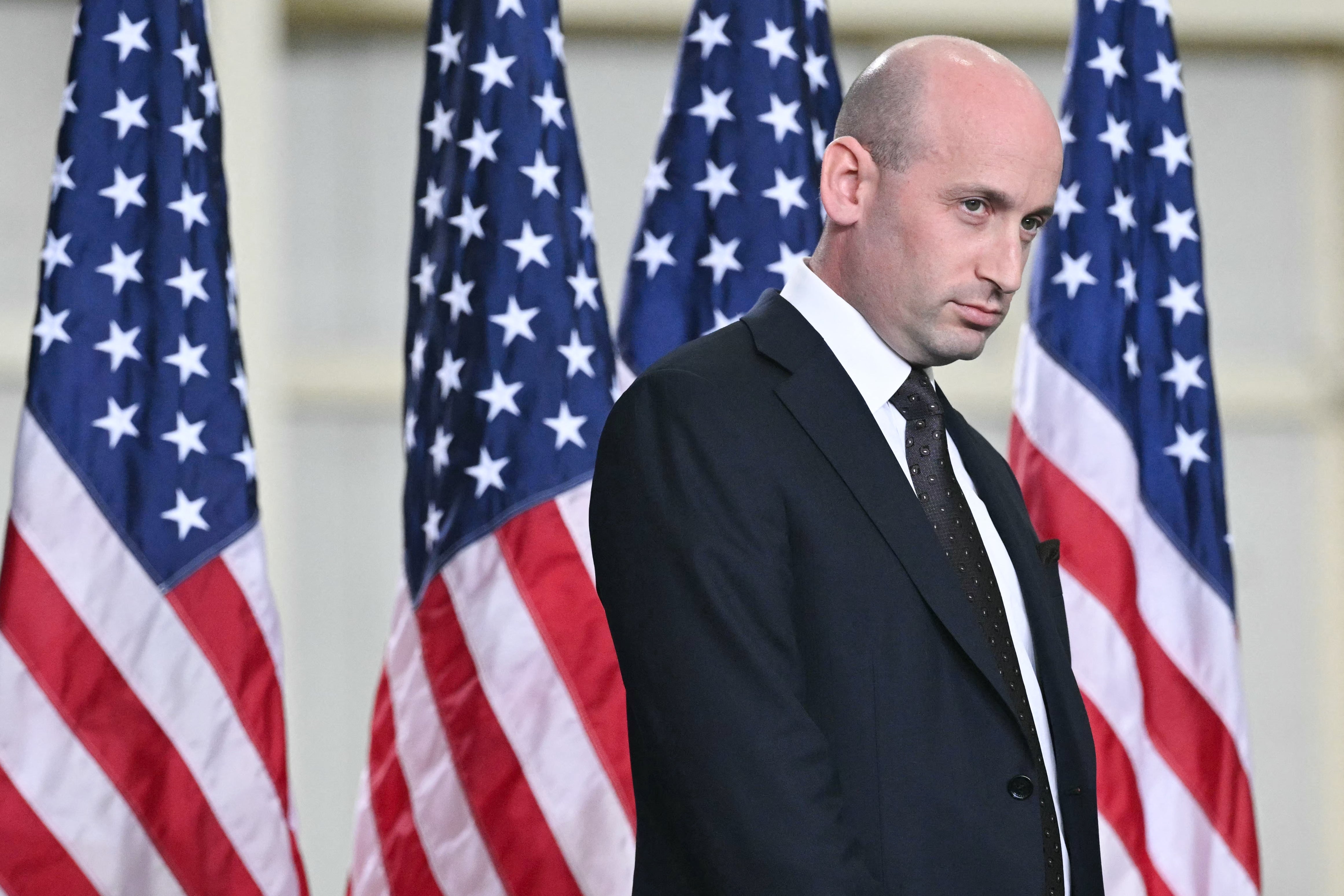
“Even where Congress has explicitly suspended habeas corpus rights, the Supreme Court has held that some alternative process must be provided to defendants, with procedural safeguards akin to a habeas corpus action,” Scharf wrote.
A week after the memo was published, White House chief of policy Stephen Miller told reporters outside the White House that the administration was “looking at” ways to circumvent habeas corpus
“The Constitution is clear, and that, of course, is the supreme law of the land, that the privilege of the writ of habeas corpus can be suspended in a time of an invasion, so that is an option we are actively looking at,” Miller said May 9.
At the time, the administration was wrestling with federal judges and the Supreme Court over the president’s use of a centuries-old wartime law to deport dozens of Venezuelan immigrants to a brutal Salvadoran prison.
A divided Supreme Court allowed the president to invoke the Alien Enemies Act to summarily remove Venezuelan nationals who were accused of being Tren de Aragua gang members, but the justices stressed that immigrants are still “entitled to notice and an opportunity to challenge their removal” in front of a judge.
Miller, an architect of the Trump administration’s anti-immigrant agenda, then suggested that Trump suspend immigrants’ right to challenge their removal altogether, according to Haberman and Swan.
“Members of the Administration often have conversations about many different lawful options to implement the President’s agenda — with the President always being the ultimate decider,” White House spokeswoman Abigail Jackson told The Independent in response to questions about the memo and the president’s response.
Trump, just months into his second presidency, was already facing desperate warnings from critics and legal scholars that his defiance of court orders had reached a dangerous constitutional crossroads. His suspension of a constitutional right would have escalated his war with a judiciary that he has seen as insufficiently deferential to his presidency and an obstacle in the way of his agenda.
Those concerns were also materializing among a small group of senior aides inside the White House, Haberman and Swan found.
“Throughout American history, all three branches of the federal government have been loathe to interfere with habeas corpus rights,” Scharf wrote in his memo, which was shared with White House chief of staff Susie Wiles.
Habeas corpus “prevents, in effect, governmental actors from detaining, imprisoning or executing individuals arbitrarily,” Scharf wrote.

Habeas corpus has been suspended only four times in U.S. history, most recently after Pearl Harbor. In every case, the U.S. was at war or facing armed rebellion, and the only president who has ever claimed authority to suspend habeas corpus without approval from Congress was Abraham Lincoln at the start of the Civil War during a congressional recess.
George W. Bush had sought to indefinitely detain terrorism suspects at Guantánamo Bay, arguing that no U.S. court had jurisdiction to hear their habeas petitions. But in a landmark ruling in 2008, the Supreme Court ruled that detainees still had a constitutional right to file those lawsuits
“The upshot of these cases is that for all persons held in de facto U.S. territory, habeas rights apply, or in the limited circumstance of military detainees, an adequate alternative to habeas must be provided,” Scharf wrote.
The memo does not include any guidance. But a day after it was published, Trump publicly suggested for the first time that he was considering it.
“There’s one way that’s been used by three very highly respected presidents,” said Trump, referring to the case of Kilmar Abrego Garcia, whose illegal removal to El Salvador was at the center of another high-profile legal battle over his return to the U.S.
“But we hope we don’t have to go that route,” Trump said.
Then-Homeland Security Secretary Kristi Noem also was questioned about Miller’s comments during a congressional hearing — but it wasn’t clear she knew what habeas corpus is.
Asked by Democratic Sen. Maggie Hassan to define it, Noem claimed it is “a constitutional right that the president has to be able to remove people from this country.”
“That’s incorrect,” Hassan fired back.
Noem said she “supports” the constitutional right and also said that “the president of the United States has the authority under the Constitution to decide if it should be suspended or not.”

By July, Immigration and Customs Enforcement had issued a sweeping policy of mandatory detention for immigrants arrested inside the U.S., upending decades of precedent and keeping people in detention for weeks or months no matter how long they have lived in the country or whether they have a criminal record.
The Trump administration also ordered immigration judges to deny bond and dismiss virtually any case when immigrants show up for their court-mandated hearings — making them immediately vulnerable to arrest and removal before they’ve had a chance to appeal.
Federal courts across the country quickly filled up with habeas corpus petitions. Dozens of new petitions are hitting court dockets every week and government attorneys are overwhelmed or quitting in droves under pressure to fight them at an unsustainable pace.
Despite dozens of court rulings against it, with judges repeatedly stressing that the administration’s policy of mandatory detention flies in the face of the Fourth Amendment, administration officials and the government lawyers they’ve deployed to defend them have relied on the policy to arrest tens of thousands of people.
Prosecutors feel beaten down, defense attorneys are struggling to keep up, judges are writing furious orders with dramatic warnings about the fate of democracy, and the immigrants at the center of their cases are stuck in the middle, languishing in detention after their abrupt arrests, or released from custody after spending days or months in ICE custody with their lives turned upside-down.